Fieldnote
Software delivery workspace
Keep requirements, development tasks, client review and release decisions in one project workflow.
Concept study with a fictional brand and illustrative data; not a client delivery.
The challenge
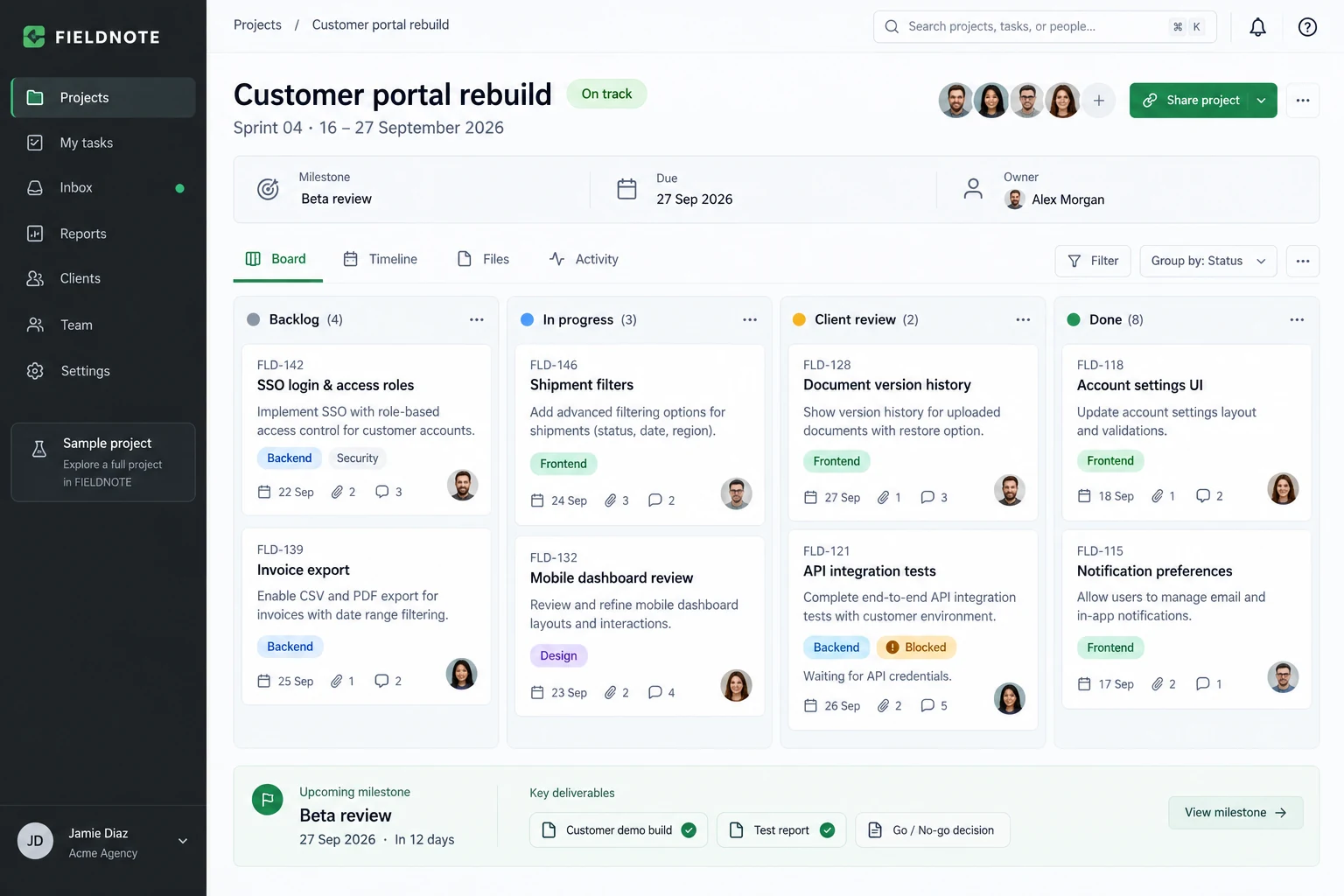
Project managers need owners and due dates; clients need to know what is in development and what awaits their decision. Blockers such as missing API credentials are easily lost in chat.
The approach
Structure each sprint around backlog, development, client review and completion. Task cards retain IDs, owners, files and blocker reasons; milestones connect a demo build, test report and acceptance decision.
Functional scope & business rules
Proposed requirements for the illustrated scenario, ready for a scoping discussion. Rules and integrations are agreed before implementation.
User roles
Project managers, developers, testers and client reviewers
Typical workflow
- 1Scope tasks and sprint
- 2Develop, test and track blockers
- 3Request client review
- 4Accept the delivery version
Requirements and sprint planning
Tasks carry an ID, business description, acceptance conditions, owner, priority and due date. Each belongs to a sprint and milestone; new requests retain their source and require a scope decision.
Board states and transition rules
Move through backlog, development, client review and completion. Review requires demo or testing evidence; closure follows agreed acceptance conditions, with each change recording its actor and time.
Blockers and dependencies
Missing API credentials or upstream services create blockers with an owner and follow-up date. Notify dependent assignees when cleared; an overdue task never becomes complete automatically.
Client review and feedback
Authorized clients approve specific deliverables or request changes with actionable feedback. Rejected work returns to an active state while prior decisions remain; internal estimates and costs stay private.
Files, versions and discussion
Attach designs, demos, test reports and versioned files to tasks. Comments retain author and time; replacing a file preserves history, and private downloads recheck project access.
Milestone acceptance and handover
Summarize tasks, open issues, version identifiers and pending decisions. A handover checklist covers agreed source or deliverables, configuration, user documentation and receipt by an authorized reviewer.
FLD-121 cannot run integration tests without customer-environment credentials. It retains its stage and receives an assigned blocker. Once access is ready, the team tests and submits a report; requested changes reopen the task while preserving the first review.
Suggested acceptance checks
- Missing mandatory evidence or unresolved blockers cannot silently produce a delivered milestone.
- A client rejection preserves previous versions, feedback and ownership history.
- A removed project member cannot continue downloading private files from old links.
Integrations & scope decisions
Agree team roles, client visibility, transitions and acceptance authority. Repository, CI and single sign-on integrations are optional; time billing, payroll and automated employee performance evaluation are outside the default scope.
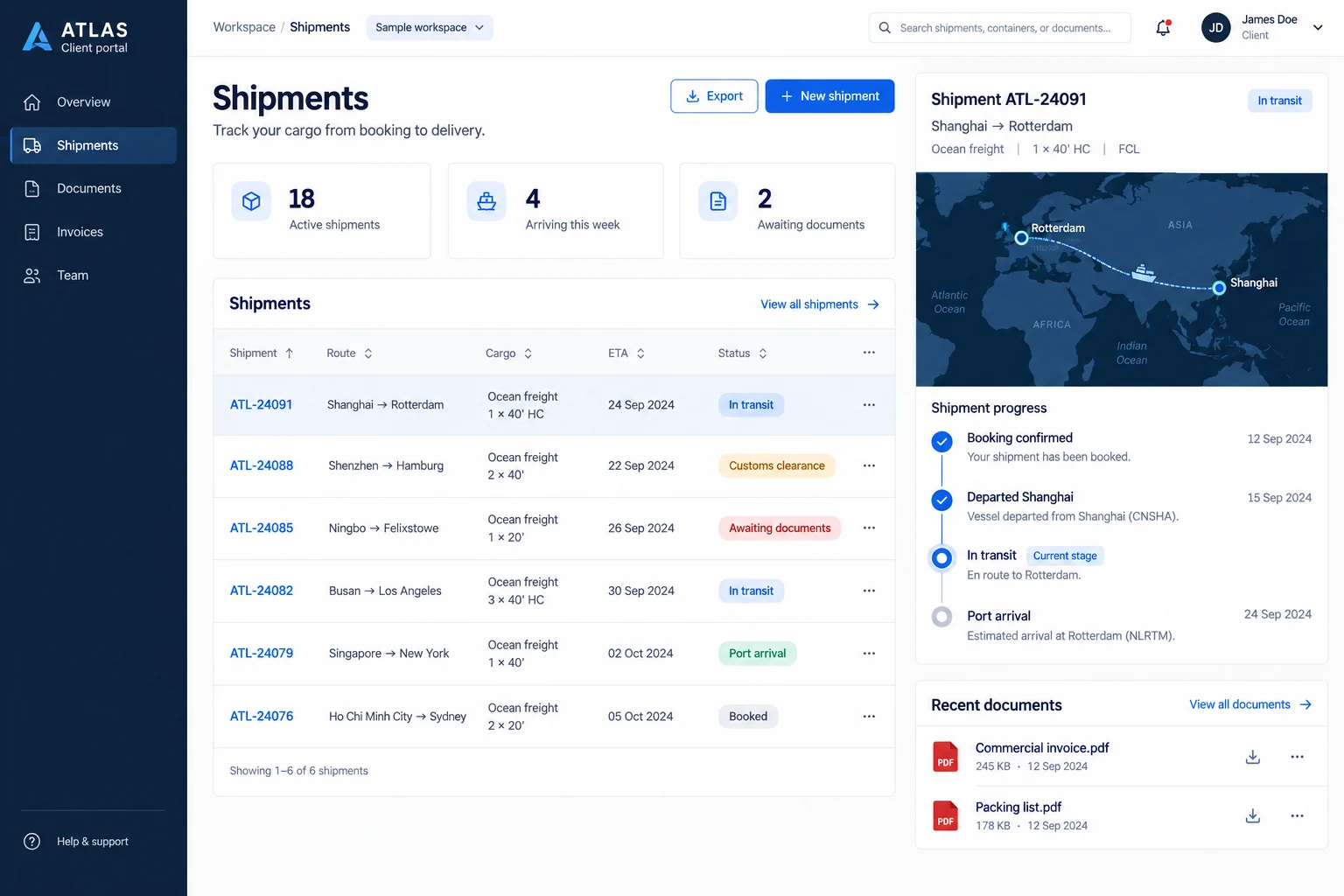
AtlasFreight forwarding client portal
Connect shippers and forwarders through shipment tracking, customs documents and exception updates.
Explore case study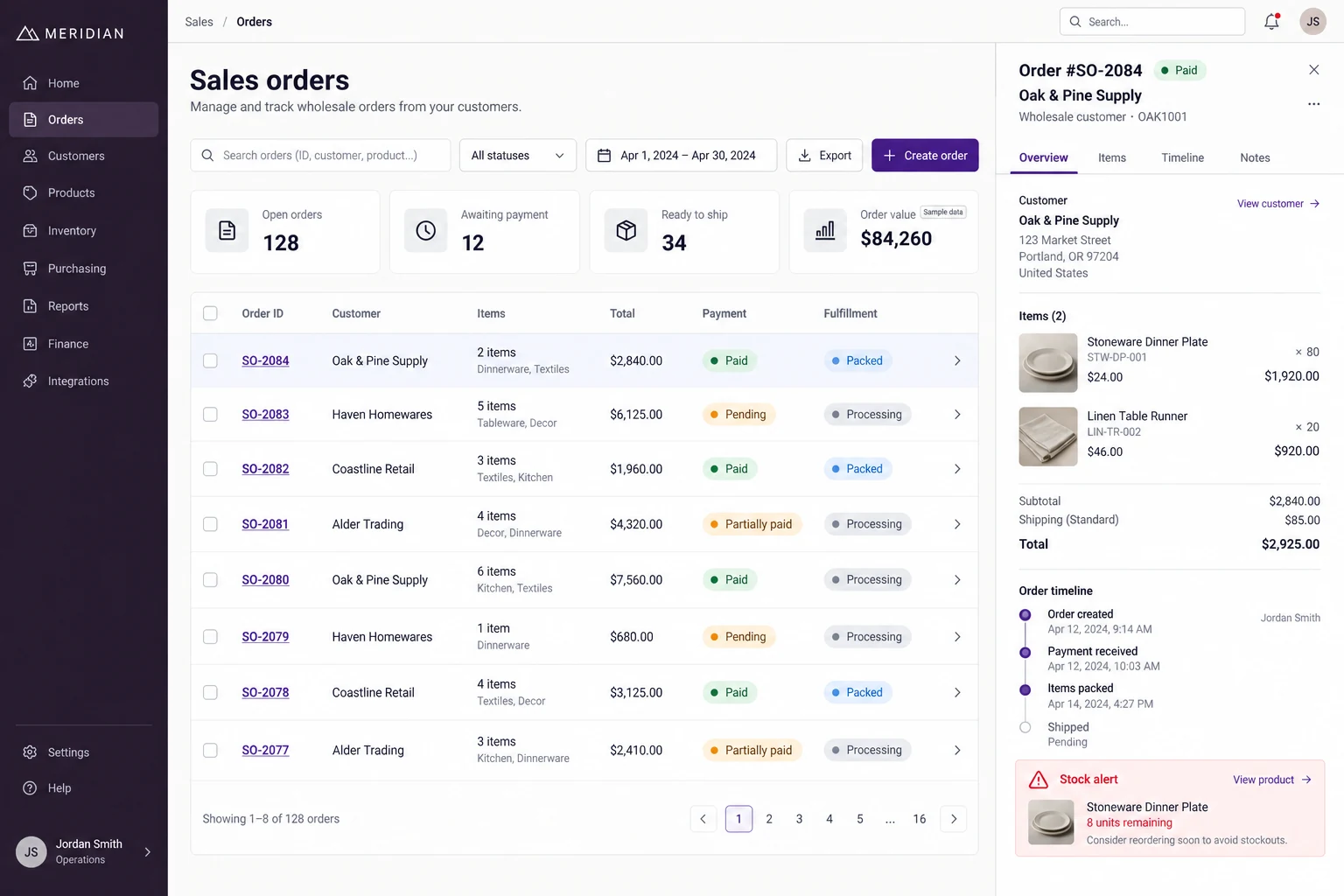
MeridianWholesale orders & inventory
Connect customer orders, payment checks, warehouse preparation and dispatch for a homewares wholesaler.
Explore case study